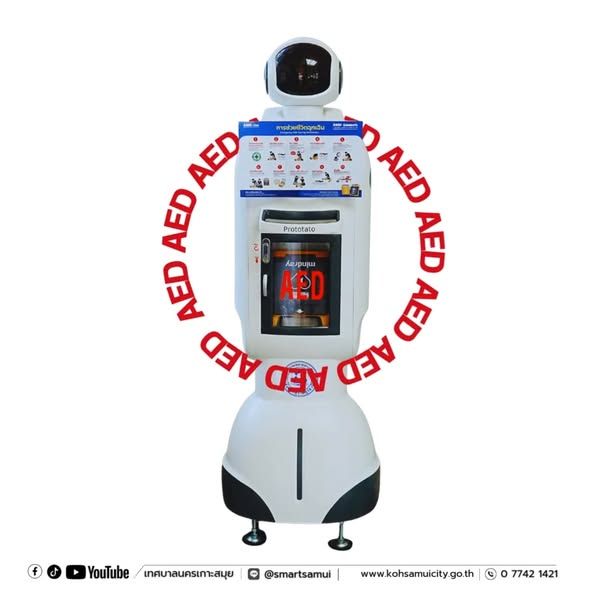
Koh Samui now has public AEDs for immediate help during sudden cardiac arrest, making our island safer for everyone.
These multi-language devices are easy to use, even without medical training, ensuring anyone can provide life-saving assistance.
KohSamui #AED #PublicSafety #IslandLife #TravelSafety #CardiacArrest #EmergencyPreparedness #ThailandTravel #SafeTravels #HealthAndSafety #TouristDestination
The Koh Samui Municipality has placed Automated External Defibrillators (AEDs) in public places to provide immediate assistance to patients in the event of sudden cardiac arrest. The step-by-step process has been designed for anyone, regardless of their medical background, to use the device safely and effectively.
Key Features of Public AEDs
- Multi-Language Support: AEDs installed in public areas on Koh Samui provide clear voice instructions in up to three languages, ensuring accessibility for locals and international visitors alike.
- Guided Use: The device delivers straightforward, vocal prompts at each step, so users do not require prior training to operate the AED properly.
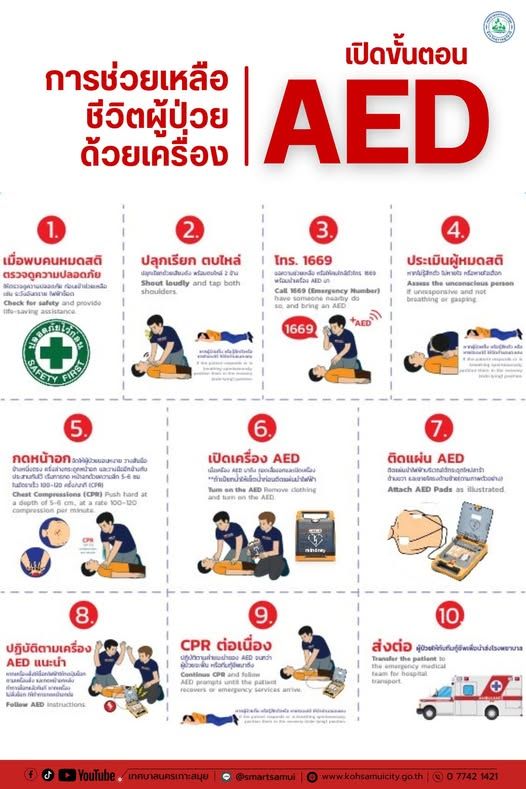
Step-by-Step Instructions for Using a Public AED
1. Remain Calm
Before initiating assistance, take a moment to compose yourself. Remaining calm enables you to listen carefully and respond effectively to each instruction.
2. Turn On the AED
Locate and turn on the AED device. Most models feature a highly visible power button or a lid that, when lifted, triggers the device to turn on automatically.
3. Follow Audio and Visual Prompts
Once the AED is active, it will start giving voice prompts. Listen carefully and follow each instruction in real time. The device may also have visual cues or illustrations for added clarity.
4. Attach the Electrode Pads
Remove or cut away the patient’s clothing to expose the chest. Peel the backing from the adhesive electrode pads and place them as shown in the diagram, typically found on both the device and pads themselves. Ensure the pads have firm contact with the skin.
5. Allow the Device to Analyze
Do not touch the patient while the AED analyzes their heart rhythm. The device will automatically assess whether a shock is necessary.
6. Deliver a Shock if Prompted
If the AED instructs you to deliver a shock, ensure nobody is touching the patient, then press the flashing shock button. Some AEDs deliver the shock automatically after the analysis.
7. Perform CPR if Advised
After the shock is administered, the AED may instruct you to begin cardiopulmonary resuscitation (CPR). Follow the on-device instructions until emergency services arrive or the patient resumes normal breathing.
8. Continue Following AED Instructions
Many AEDs will provide ongoing instructions, alternating between CPR and heart rhythm analysis, until professional help takes over.
Community Care and Safety Commitment
The installation and guidance for using public AEDs are part of Koh Samui’s wider commitment to public safety and sustainable living. The initiative aims to create a safer environment for both residents and visitors, reinforcing Koh Samui’s identity as a livable and caring smart island for all.
Frequently Asked Questions
Frequently Asked Questions (FAQ)
How do I use a public AED on Koh Samui if I have no medical experience?
Public AEDs on Koh Samui are designed for anyone to use, even with no prior training. Simply turn on the device, and it will guide you step-by-step with visual and audio instructions in multiple languages – just follow each prompt carefully to provide effective assistance.
Are the AEDs accessible to international visitors who may not speak Thai?
Yes! Public AEDs on Koh Samui offer multi-language support, featuring clear voice instructions in up to three languages. This ensures that both locals and tourists can understand and use the device with confidence in emergency situations.
What actions should I take after turning on a public AED for a cardiac emergency?
After turning on the AED, follow its audio and visual prompts – attach the electrode pads as shown, let the device analyze the heart rhythm, deliver a shock if instructed, and begin CPR when prompted. Keep listening and following instructions until emergency personnel arrive or the person recovers.