
Burning Grass and Garbage: Legal Risks and Environmental Impact in Samui
Burning grass and garbage in Samui is illegal and severely punishable by law, with penalties up to 7 years in prison or 140,000 THB fines. This harmful practice pollutes our air, damages health, and threatens our beautiful island, so let's protect Samui by disposing of waste properly.
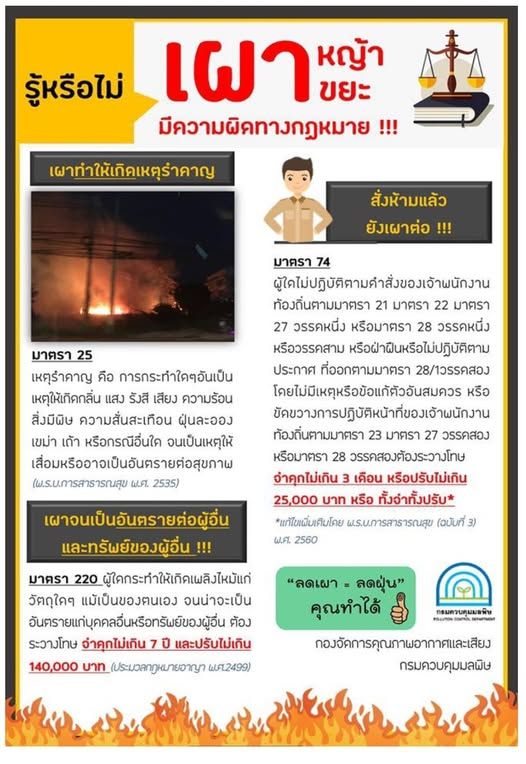
Burning grass and garbage in Samui is illegal and severely punishable by law, with penalties up to 7 years in prison or 140,000 THB fines. This harmful practice pollutes our air, damages health, and threatens our beautiful island, so let's protect Samui by disposing of waste properly.
Understanding the Legal Framework
Open burning of grass and garbage is strictly prohibited in Samui and across Thailand, falling under both public health and criminal laws. The practice leads to not only environmental degradation but also significant legal consequences for violators.
Public Nuisance Regulations Under the Public Health Act
According to Section 25 of the Public Health Act B.E. 2535 (1992), burning grass, rubbish, or other materials qualifies as a public nuisance. A public nuisance is defined as an act that generates unpleasant odors, excessive light or noise, hazardous emissions, toxic substances, soot, trash, ash, or any other factor that may threaten public health or comfort. Authorities are empowered to intervene and penalize those responsible.
Criminal Liability for Dangerous Burning Activities
Section 220 of the Criminal Code B.E. 2499 (1956) imposes severe penalties on individuals who set fire to any material - regardless of ownership - if the act places other people or their property at risk. Offenders can face up to 7 years of imprisonment, a fine of up to 140,000 THB, or both. This stringent measure reflects the high risk and potential for uncontrolled fires to cause widespread harm.
Penalties for Disobeying Local Authorities
Section 74 of the updated Public Health Act sets out penalties for failing to comply with local administrative orders or obstructing public officials in the performance of their duties. Non-compliance can result in imprisonment of up to 3 months, a fine up to 25,000 THB, or both.
Environmental and Health Consequences
Open burning emits a range of pollutants, including dust, soot, particulate matter, and toxic chemicals that are detrimental to air quality. Recurrent burning events contribute to a buildup of fine particulate matter (PM2.5 and PM10) and release substances like carbon monoxide, volatile organic compounds, and dioxins.
- Dust and Air Pollution: Fine dust from burning not only causes murky skies but also increases respiratory and cardiovascular risks among residents, especially for vulnerable groups such as children, the elderly, and those with pre-existing health conditions.
- Public Health Risks: Exposure to smoke from burning trash and vegetation is associated with aggravated asthma, lung diseases, and heightened risk of infections.
Sustainable Alternatives to Burning
Eliminating the practice of open burning is fundamental for a healthier community and cleaner air. Residents are encouraged to utilize designated waste disposal services and composting for organic waste. Grass clippings, leaves, and other biodegradable materials can be processed into compost instead of being set alight, reducing emissions and enriching the soil.
Municipalities in Samui provide collection points and proper disposal channels for household and garden waste. Community awareness campaigns promote modern waste management practices, highlighting not only the legal ramifications but also the broader benefits for health and environmental sustainability.
The Vision for a Livable, Smart, and Sustainable Samui
Local authorities and environmental agencies continue to spearhead initiatives that aim to transform Samui into a model of smart development and sustainability. The campaign for clean air is a vital component of this vision, encouraging all residents and visitors to refrain from burning and to participate in community efforts for a cleaner environment. Cleaner air, coupled with sustainable development, ensures a higher quality of life for everyone on the island.
Information supported by the Air and Noise Quality Management Division and the Pollution Control Department.
Frequently Asked Questions
FAQ: Burning Grass and Garbage in Samui
What are the legal consequences of burning grass and garbage in Samui?
Burning grass and garbage is strictly illegal in Samui and carries severe penalties. Offenders can face up to 7 years in prison or be fined as much as 140,000 THB under the Criminal Code B.E. 2499 (Section 220). Additionally, failing to comply with local authorities or obstructing their duties can result in up to 3 months in jail or a 25,000 THB fine as per Section 74 of the Public Health Act.
How does burning grass and garbage affect the environment and public health?
Open burning releases pollutants such as fine dust (PM2.5 and PM10), soot, toxic chemicals, and dioxins. These pollutants degrade air quality and increase risks of respiratory and cardiovascular diseases, especially for children, the elderly, and people with health issues. Burning trash and vegetation is linked to aggravated asthma, lung diseases, and infections.
What sustainable alternatives are available instead of burning waste?
Residents are encouraged to use designated waste disposal services and composting for organic matter. Municipalities in Samui provide collection points and promote composting of grass clippings and leaves. By refraining from burning and embracing proper waste management, you help protect Samui's environment and contribute to a healthier, cleaner, and more sustainable community.
Tags

British expat and former marine biologist who settled on Koh Samui in 2005. Founder of the Samui Community News Network and regular contributor to local English-language publications. Passionate advocate for marine conservation and sustainable island tourism.