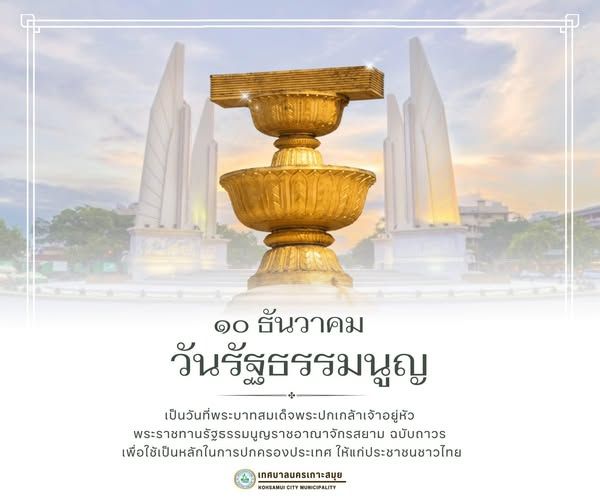
Celebrate Thailand’s Constitution Day on December 10th, a day commemorating King Prajadhipok’s 1932 granting of the first permanent constitution, transitioning Siam to a constitutional monarchy. Across Thailand, witness proud flag displays and vibrant ceremonies honoring democracy and the nation’s historic journey towards freedom and rights.
ConstitutionDayThailand #ThailandHistory #ThaiCulture #DemocracyDay #TravelThailand #BangkokEvents #KohSamuiLife #ExploreThailand #FreedomAndRights #December10th
Constitution Day is observed annually on December 10th in Thailand, commemorating a pivotal moment in the country’s evolution into a constitutional monarchy. This national holiday celebrates the promulgation of the Kingdom’s first permanent constitution, symbolizing a significant transformation in the nation’s system of governance.
Historical Background
Prior to 1932, Thailand, then known as Siam, was governed under an absolute monarchy. On June 24, 1932, a bloodless revolution led by a group known as the Khana Ratsadon (People’s Party) ended the absolute rule of King Rama VII, His Majesty King Prajadhipok. The revolution ushered in parliamentarian reforms and called for a constitutional framework.
The Granting of the Constitution
On December 10, 1932, King Prajadhipok officially granted the Constitution of the Kingdom of Siam to the people. This marked the beginning of constitutional democracy in Thailand. The new charter established a parliamentary system with the creation of the National Assembly, signifying the monarchy’s transition from absolute power to constitutional rule based on checks and balances.
Changes Introduced by the Constitution
The constitution laid out the foundations for a modern government:
- Establishment of the National Assembly (legislative branch)
- Introduction of a system of government with Cabinet and Prime Minister (executive branch)
- Formation of an independent judiciary (judicial branch)
- Guarantee of basic rights and freedoms for the Thai people
Observances and Traditions
Constitution Day is a public holiday throughout Thailand. Government buildings and private residences prominently display the national flag, and portraits of the monarchs are often festooned with decorative lights.
Ceremonial events are organized by central and local government bodies, including parades, exhibitions, and educational activities focusing on the history of the constitution. Schools and civic groups often host discussions and activities to raise awareness about the importance of democracy and constitutional governance.
Location-Specific Observances
In places such as Koh Samui (located in Surat Thani Province), local government bodies like the Koh Samui Municipality may organize special events, which can include public speeches, workshops, and commemorative gatherings. These initiatives aim to foster communal spirit and educate the public about the principles and significance of the constitution.
Significance in Modern Thailand
Constitution Day remains relevant as it honors the legal and societal structure that supports Thai democracy. The day encourages reflection on the nation’s political development, the role of the monarchy, and the ongoing process of legislative evolution. As such, December 10th serves as both a commemoration of past achievements and a platform for continued advocacy of the democratic ideals embodied in the constitution.
Frequently Asked Questions
Constitution Day in Thailand: FAQs
What is the historical significance of Constitution Day in Thailand?
Constitution Day, celebrated on December 10th, marks the anniversary of King Prajadhipok granting the nation’s first permanent constitution in 1932. This event ended absolute monarchy in Siam and established a constitutional monarchy, paving the way for democracy, parliamentary governance, and the protection of citizens’ rights.
How is Constitution Day observed and celebrated across Thailand?
Constitution Day is a national public holiday. Government buildings, schools, and private homes display the Thai flag and decorate with lights and portraits of monarchs. Communities hold parades, ceremonies, educational activities, and exhibitions highlighting the historical importance of the constitution and the principles of democracy.
Why is Constitution Day still important in modern Thailand?
Constitution Day symbolizes both the country’s transition to democracy and the ongoing importance of constitutional governance. It serves as an annual reminder of the foundations of Thai society, the evolution of law and freedoms, and encourages public reflection and education about democracy and national identity.