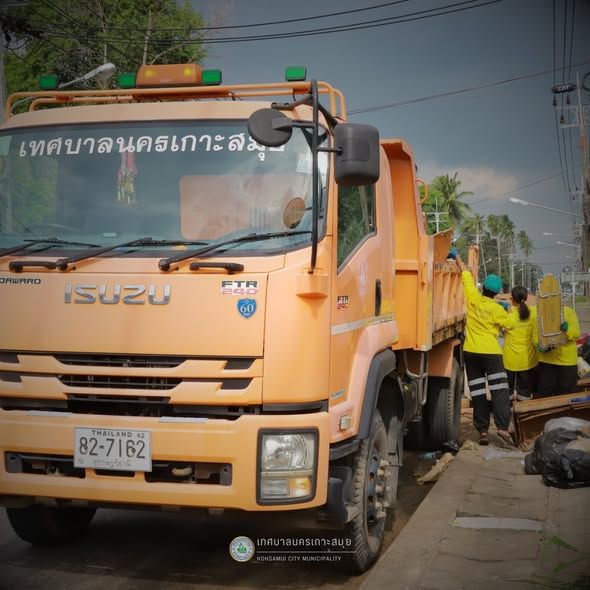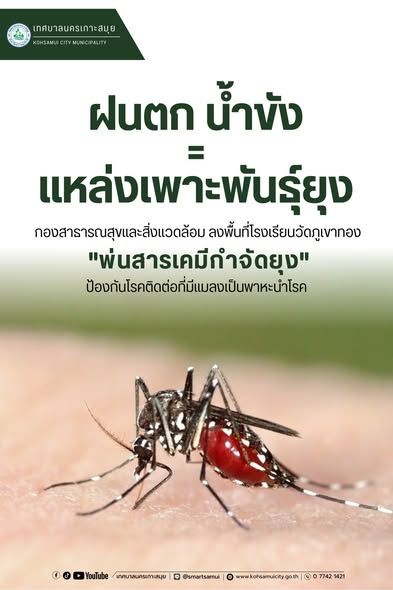
Heavy rains increase mosquito breeding, posing a health risk. Koh Samui Municipality proactively sprayed Wat Phu Khao Thong School to control mosquitoes and larvae, safeguarding students and the community.
KohSamui #DenguePrevention #MosquitoControl #PublicHealth #Thailand #CommunitySafety #HealthAndWellness #TravelThailand #IslandLife #Samui
Rainfall, particularly in tropical regions, frequently leads to waterlogging in various areas like streets, schoolyards, and drainage systems. Stagnant water from persistent rain provides ideal breeding grounds for mosquitoes, especially species like Aedes that transmit vector-borne diseases. This environmental issue increases the risk of outbreaks of illnesses such as dengue fever and other mosquito-borne diseases in affected communities.
Mosquito Control Efforts at Educational Institutions
Understanding the crucial link between stagnant water and vector-borne disease risks, Koh Samui Municipality, through the Health Promotion and Disease Control Division of the Public Health and Environment Department, implements proactive mosquito control measures. A specialized team was recently dispatched to Wat Phu Khao Thong School. Their responsibilities included spraying chemical agents designed to eradicate mosquito larvae and adult mosquitoes. These chemicals were strategically applied around the school premises and targeted all drainage points to minimize the mosquito population in and around educational facilities.
Aims and Objectives of Mosquito Control Activities
The primary goal of these mosquito control operations is the prevention of vector-borne diseases among students, educators, and the wider community. By reducing mosquito habitats, the municipality aims to:
– Decrease the incidence of illnesses such as dengue fever
– Minimize school and community outbreaks
– Safeguard the health of children, school staff, and neighboring residents
The approach reflects a wider strategy of ensuring community well-being through proactive public health interventions.
Smart and Sustainable Development Goals
Koh Samui places strong emphasis on smart and sustainable urban development. The vision of creating a safe and livable island highlights the municipality’s commitment to balancing growth with the well-being of its inhabitants. Initiatives such as regular mosquito control form a part of broader strategies to:
– Enhance public safety
– Support sustainable environmental management
– Foster a healthy and livable environment for all residents and visitors
Community Engagement and Health Education
Alongside operational measures, educating the community about sanitation and personal protection practices remains a vital component. Public health authorities encourage:
– Regular disposal of stagnant water in and around homes
– Use of mosquito repellents and protective clothing
– Participation in community clean-up campaigns
These collective actions help reduce potential mosquito breeding sites and empower individuals to contribute to their community’s health resilience.
Continuous Monitoring and Preparedness
Surveillance and ongoing assessment underpin effective mosquito control programs. The Health Promotion and Disease Control Division routinely monitors vector populations and evaluates the outcomes of intervention campaigns. Data-driven approaches guide timely responses, helping to address emerging risks and adapt strategies to changing weather patterns and disease trends.
Frequently Asked Questions
Frequently Asked Questions (FAQ)
How does waterlogging contribute to mosquito breeding and health risks?
Waterlogging caused by heavy rainfall leads to stagnant water accumulation in areas such as streets, schoolyards, and drainage systems. This stagnant water creates an ideal environment for mosquitoes, especially the Aedes species, to breed. Increased mosquito populations heighten the risk of outbreaks of vector-borne diseases like dengue fever in the community.
What steps is Koh Samui Municipality taking to control mosquito breeding in schools?
Koh Samui Municipality, through its Health Promotion and Disease Control Division, regularly dispatches specialized teams to educational institutions such as Wat Phu Khao Thong School. These teams spray chemical agents that eliminate both mosquito larvae and adult mosquitoes, focusing on drainage points and other potential breeding sites around the school to reduce mosquito populations and protect public health.
How can community members help prevent mosquito-borne diseases?
Community involvement is crucial in mosquito control efforts. Residents are encouraged to dispose of stagnant water around homes, use mosquito repellents and protective clothing, and participate in local clean-up campaigns. These actions reduce mosquito breeding sites and enhance community-wide protection against vector-borne diseases.